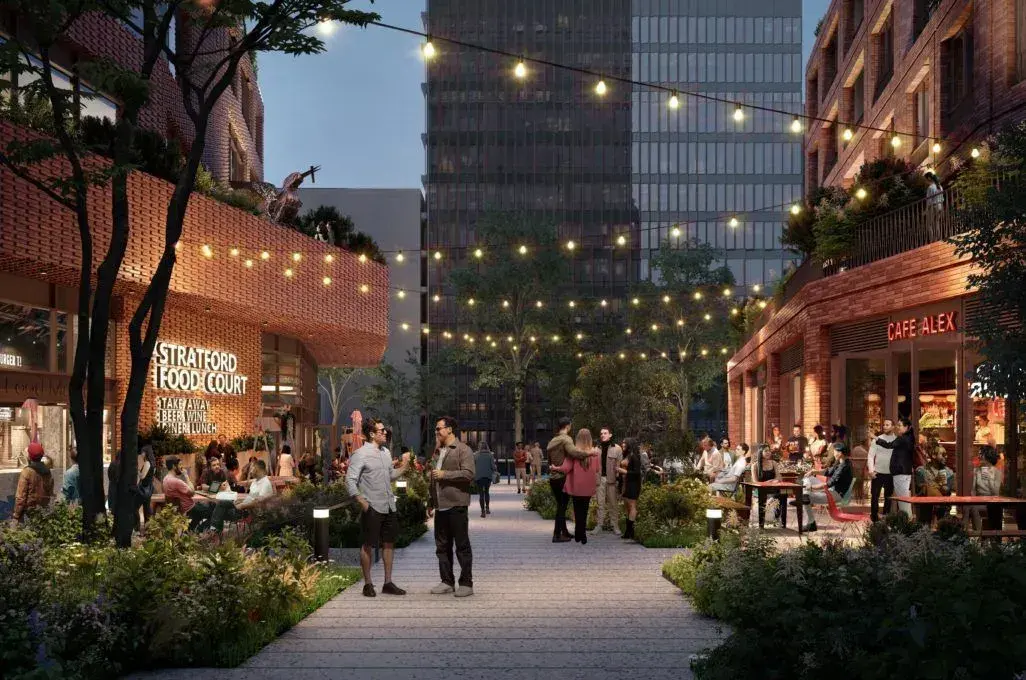
IQL North is the next major piece in the Stratford / Olympic Park story. Positioned directly opposite Stratford International Station and adjacent to Queen Elizabeth Olympic Park, the site covers plots N20–N23 and transforms a previously under-used area into a fully realised neighbourhood.
Under the approved planning consent (Ref 23/00441/FUL) the scheme will deliver:
- 672 new homes for the Borough of London Borough of Newham, including ~172 social-rent homes.
- 909 student-beds (Purpose-Built Student Accommodation) with ~42.5% affordable student homes.
- Around 9,000 m² of commercial / employment space for local business, co-working, retail and F&B.
- A significant amount of new public realm (≈10,000 m²) including green space, community gardens, play space & transport hub.
The architectural team includes Mecanoo and other consultants such as Buro Happold Engineers.
Current Status
- Planning consent granted unanimously by the London Legacy Development Corporation (LLDC) on 22 October 2024.
- Meanwhile-use activity already in place: the “Lighthouse & Gardens” community space on-site is active and building local engagement while construction planning advances.
- Next steps include detailed design submissions, Construction Management Plan (CMP) preparation and start of enabling works.
What It Means for Local Residents
Positive impacts
- New homes and student accommodation will bring vitality to the area, support local shops, cafés and services.
- Extensive new public space and transport/active-travel links promise improved pedestrian / cycle connectivity.
- Commercial space may provide new businesses, co-working hubs or community-driven initiatives beneficial to residents.
- The meanwhile-use of the site already provides community gardens and creative spaces (what’s here now before full build begins).
Points to monitor
- Construction will run for several years; residents nearby (e.g., International Way, Celebration Avenue) should expect some noise, traffic and logistics movements.
- As the scheme includes both student housing and private homes, management of tenure mix, behaviour and community integration is important.
- The actual uses of the commercial space (retail, F&B, community) need to align with local resident needs rather than generic occupant models.
- The public-realm design must be inclusive and well-maintained to ensure long-term benefit, not just at hand-over.