Red Heat Warning: how to keep your dog and pets safe this week
The Met Office Red Extreme Heat Warning is in force across East London on Wednesday 25 and Thursday 26 June, from 9am to 9pm both days. Temperatures are forecast to exceed 39°C with very high humidity - and East Village’s urban heat island effect means it will be among the hottest spots in the city. This is not just a hot day to be cautious about. For dogs, these are genuinely dangerous conditions, and the advice from vets, the RSPCA and Dogs Trust is clear: treat this week differently.
Rethink your walk routine entirely for these two days
On a Red Warning day with 39°C+ heat and high humidity, vets are unambiguous - even a short walk can trigger heatstroke. Dogs cool primarily through panting, and panting is far less effective when humidity is high (dew points are forecast around 22°C this week). The numbers are stark: nearly 75% of UK heatstroke cases in dogs are linked to exertion, and 67.5% specifically to walking.
The RSPCA and Dogs Trust advise limiting walks to before 8am or after 8pm on these days, when pavement temperatures have had a chance to drop. If you have a flat-faced breed - French Bulldogs, Pugs, English Bulldogs - or an older dog, or an overweight dog, the advice goes further: consider skipping walks entirely on Wednesday and Thursday and using indoor enrichment instead.
Do the five-second tarmac test before every outing
Before you head out, press the palm of your hand flat on the pavement and hold it there for five seconds. If you can’t hold it comfortably, it is too hot for your dog’s paws. East Village’s paths and concrete plazas can reach 60°C or more in direct sun - well above the threshold at which paw pads burn. Metal surfaces like manhole covers and drain grilles get even hotter.
If you do need to go out, route your walk onto grass or shaded paths wherever possible. Check whether even Victory Park’s paths are safe before setting out - shaded grass is always a better option than sun-baked tarmac.
Fresh cold water, always - and carry it with you
Keep your dog’s water bowl topped up with fresh cold water throughout the day, and add ice cubes to keep it cool. On any outing, carry water for your dog - dehydration sets in quickly in this heat.
Know the six signs of heatstroke - and act fast
Heatstroke is a medical emergency. Knowing the signs and acting immediately can save your dog’s life. Watch for: heavy or continuous panting; excessive drooling; bright red or pale gums; wobbly or uncoordinated movement; lethargy, drowsiness or collapse; vomiting or diarrhoea.
If you see any of these signs, act straight away. Move your dog to a cool, shaded area. Offer small amounts of cold water. Pour cool - not icy - water over them, focusing on the neck, armpits and groin. Do not cover them in a wet towel, as this traps heat rather than releasing it. Call your vet immediately. The rule is: cool first, transport second.
Keep your flat cool for your dog
Dogs left alone in East Village flats face a real risk during a heatwave. These are high-performance, airtight buildings - excellent in winter, but they can become very hot during extreme heat, particularly in flats with large south- or west-facing windows.
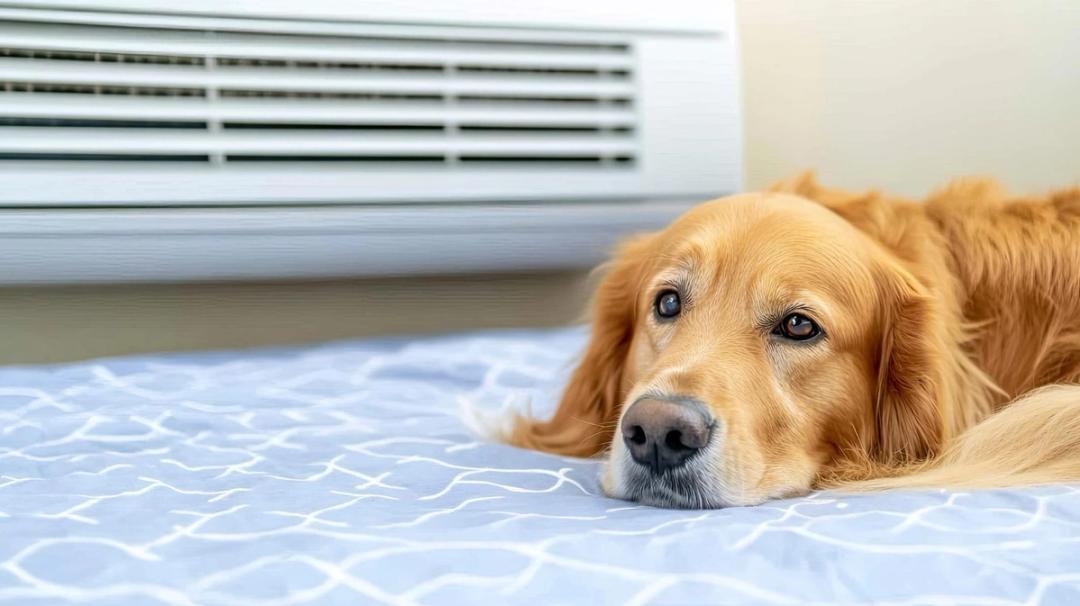
Apply the same flat-cooling approach as you would for yourself: close blinds early to block solar gain, switch your MVHR unit to summer bypass mode if your flat has one, and ventilate overnight when temperatures drop. For your dog, provide a cooling mat, a damp towel they can lie on, and make sure they have access to a cool tiled floor - bathrooms and kitchens are often the coolest rooms in the flat.
Make frozen enrichment at home
Indoor enrichment keeps dogs mentally stimulated and content without any heat risk. Freeze their usual wet food inside a KONG toy or spread it on a lick mat and freeze it. Freeze low-sodium chicken broth in an ice cube tray for a simple cooling treat. Offer chilled cucumber or seedless watermelon slices - both are safe for dogs and help with hydration.
These activities give your dog something to focus on and help bring their core temperature down at the same time. A busy, cool dog is a safe dog.
Flat-faced and high-risk breeds need extra care
If you have a French Bulldog, English Bulldog, Pug, or any other brachycephalic breed, treat this Red Warning as high alert. Their shortened muzzles make panting significantly less efficient - and panting is their only real cooling mechanism. Statistically, Bulldogs are around 14 times more likely to suffer heat-related illness than Labradors.
Keep brachycephalic dogs indoors throughout Wednesday and Thursday, on a cooling mat, in the coolest room of the flat. If they show any sign of distress - laboured breathing, excessive drooling, red gums - call a vet immediately. Do not wait to see if they improve on their own.
Don’t forget small pets: rabbits and guinea pigs
Outdoor hutches and runs can become dangerously hot very quickly in direct sun. Move them to the coolest shaded spot you can find. Cover the top of wire runs with damp towels to create evaporative cooling, and ensure constant access to fresh water.
For rabbits, lightly misting the ears with cool water can help regulate temperature - provided it doesn’t cause them distress. If your small pets are kept indoors in a flat, keep the room cool and well ventilated, and check on them regularly throughout the day.
If you see a dog in a hot car - call 999
With temperatures expected to exceed 39°C, a car parked in direct sun will reach fatal temperatures for a dog within minutes - even with a window left slightly open. If you see a dog showing signs of distress in a parked vehicle, call 999 and ask for the police. Don’t hesitate.
East Village is home to one of London’s most dog-loving communities. Looking out for each other’s pets - checking in on a neighbour, sharing a water bowl, keeping an eye out on the street - is exactly the kind of thing this neighbourhood does well.
Comments
Loading comments…
Your account has been blocked from commenting. Contact us via the contact form if you'd like to discuss.